



After many months of speculation, the Funding Anthropalypse is finally beginning. Anthropic publicly released its amended S-1 filing on 10th November and is expected to start trading on Thursday 19th.
The S-1/A sets out when staff can sell or gift their shares - 10% of their holdings from day one; and the rest between Anthropic’s FY26 results and around May 2027. Importantly, the company’s generous matching scheme runs until at least 2032, so employee DAFs and gifts will be augmented by up to 300% for the foreseeable future.
All figures below use the $70-$78 price range in the 10th November filing.
One thing is now abundantly clear: tens of billions of dollars are heading to donor-advised funds, and therefore likely to charity.
The Funding Anthropalypse is real.
When can Anthropic employees donate their shares?
Non-founder directors, officers, current and former employees and consultants can sell or gift in three tranches:
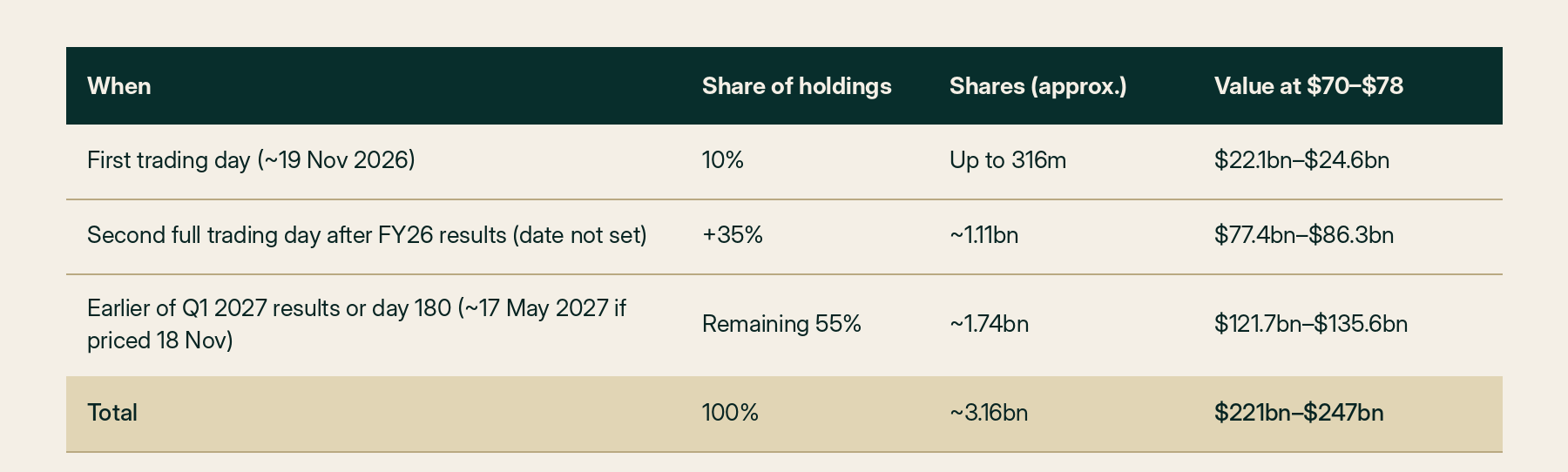
These percentages apply to shares held on 31st October - those that vest later go into the final release tranche.
Rank-and-file staff cannot gift or donate shares still subject to lock-up. Officers and directors can do this, but the charity has to sign a lock-up as well, so it doesn’t make much difference.
Co-founders, the biggest givers of all if they fulfil their public pledges, are on a separate, longer schedule - up to 365 days, with around a third of their equity unlocked on day 180.
Does Anthropic’s donation match end at the IPO?
No.
Each person’s donation period runs until whichever comes later - six years from the listing date or two years after their last vest. Staff who received their offer before 17th May 2024 get a 3:1 match on up to half their equity awards. Later joiners get 1:1 on up to a quarter of their starting grant.
The filing helpfully lists Anthropic’s exposure based on matching commitments - 553m shares, or $38.7-$43.2bn at the price range in the S-1/A. Most of that belongs to early staff - the roughly 20% of pledgers who joined before May 2024 account for 84% of it.
By my arithmetic (and some educated guesswork), staff have committed around 244m shares to unlock this match, which brings the total to $56-$62bn in giving still to come from vested shares.
Consider an illustrative staffer. They joined in 2023, so receive the 3:1 match; they hold 200,000 vested shares at 31st October; they pledged the maximum 50% that can be matched; and they haven’t given anything yet.
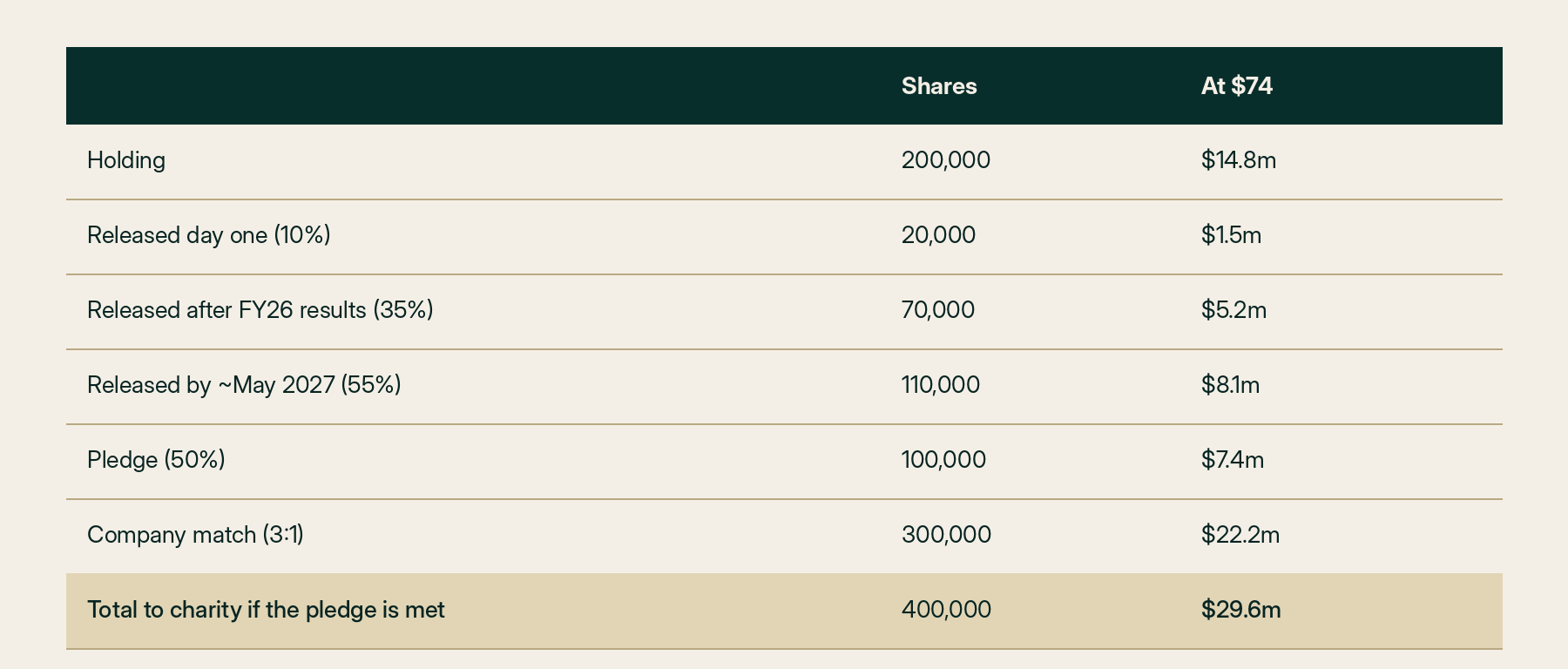
This shows us several interesting things:
They could fulfil most of their pledge in early 2027 ($6.7m of their own giving, against a $7.4m pledge), and the rest by the summer;
The match lets them give twice the value of their own holding and still keep half of it;
The amount released on day one ($1.5m) is sufficient to make a first round of grants.
Should Anthropic staff give on the first day of trading?
Nothing in the S-1/A forces staff to make gifts on day one. The match lasts for several years and is secured when money is put into a DAF or is donated directly.
Nonetheless, there are strong arguments to give to frontline charities soon, which I and others have made before:
Donations are likely to become less cost-effective over time;
It will establish a giving habit;
Many fields feel particularly urgent at the moment, including AI safety, climate, and global health and development;
Holding a volatile single stock is extremely risky;
Giving now can prepare the ground for significant future giving, when the bulk of staff holdings become available.
If you agree with any or all of these, you should start giving to frontline organisations sooner rather than later, and you may need to gift or sell shares to fund this.
Obviously, as someone who advises AI-lab staff on their giving at Ultra Philanthropy, I’m conflicted, so you should take a range of advice on how to think about the risk and impact of giving now versus later. If you want any help before your first grants, however, please reach out.
When will charities see money from Anthropic staff?
Mostly from next spring onwards. Only 10% of staff holdings are available from day one, and those can still be parked indefinitely in a DAF. The filing also doesn’t say whether shares held in a DAF are locked up.
The most conservative bet is to expect really significant gifts to come after the bigger releases, likely sometime in Q1 and then by May 2027. This giving will still be subject to the usual bottlenecks, including donor distraction or indecision.
However, mid-2027 is not a long time to wait, or indeed to prepare, so charities should start becoming ‘legibly excellent’ and sharpening their scaling plans now.
It’s also worth noting that even the pre-IPO and day-one allocations are still significant influxes of capital under any normal circumstances - the filing shows Anthropic issued around $2bn in matching shares between the end of September and early November (this money is in DAFs, not yet with charities, but it’s still around 5x GiveWell’s entire 2025 grantmaking).
What should other donors do before May 2027?
Even if you have no connection to AI equity, you will still be affected by the Funding Anthropalypse, especially if you give to effective altruist causes.
Donors and advisors have generally been giving ahead of the AI windfall for some time, and we now have an expected trading date and a price range.
If you want to give ahead of time, while the price of impact remains somewhat stable, you have until mid next year to get started. Use our free, unbiased matching tool to find an advisor if you need some help.
What should Anthropic staff, charities and donors do now?
We can now say with more confidence when the Anthropalypse will arrive and how big it could be at the price range in the S-1/A. Take action now:
Staff at AI labs: decide your DAF payout timetable and start thinking about your first grants (amounts and, ideally, destinations). Your first 10% can fund them and be matched.
Charities: plan around spring 2027, make yourself easy to fund and have a plan for scaling by then.
Other donors: if you are persuaded to front-load your giving, the filing gives you until roughly May next year.
Jack Lewars is the founder of Ultra Philanthropy, an independent advisory that helps major donors give for maximum impact, and is the fund manager of its Mid-Stage Global Health Fund. He advises donors giving up to nine figures a year, and is Chair of Trustees at High Impact Athletes. Talk to him about your giving.
I used Claude to help structure my thoughts and to suggest improvements and flag gaps, as well as for proofreading; all views, primary drafting and final edits are mine.